Wild Horses on Easter Island
Are there wild horses on Easter Island? Yes: free-roaming horses, brought by missionaries in 1864. Their history, the Rapa Nui word for horse, and how to ride one.
Yes, Easter Island has free-roaming horses. They came with the missionaries who settled on the island in 1864, by a 2021 study of the Rano Raraku crater lake in PLoS One, which also notes free-roaming horses that often graze inside the crater. You cannot ride those, but the island’s stables will put you on one of theirs: Kapua Tours & Experience’s Terevaka Horse Excursion is US$130 per adult with hotel pickup (checked November 2026).
Where Easter Island’s horses came from
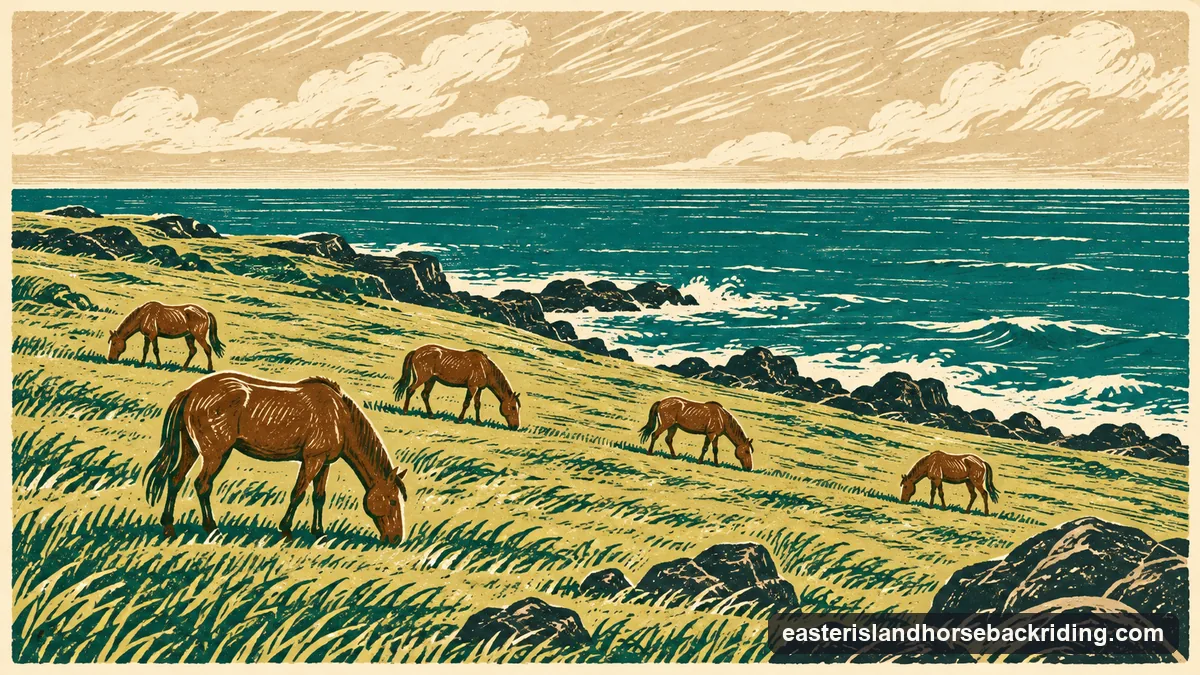
The study of the Rano Raraku crater lake (Argiriadis and others, PLoS One, 2021) puts it in one line: horses, sheep and cattle “were introduced by the missionaries who settled in 1864”. Sheep were numerous for almost a century after 1870, the study adds, and were then largely replaced by cattle and horses. Its authors saw horses drinking fresh water at seeps along the coast near Rano Raraku, and point to horses grazing on the lake’s shores inside the crater.
How many horses are there?
Neither Ma’u Henua, which manages Rapa Nui National Park, nor the two studies cited on this page gives a number for today’s horses, so this page prints none. The one count in those sources is old: in 1930 the von Schroeders commission’s round-up counted 500 horses and 300 cattle held by the Rapa Nui people, as the anthropologist Rolf Foerster sets out in an article on the island’s livestock (Chungara, Revista de Antropología Chilena, 2021).
What horses mean on the island
Foerster’s article shows how much the horse matters on Rapa Nui. The Rapa Nui word for horse is hói. He cites the linguist Fuentes (1960), who noted that the Rapa Nui language puts the horse, alone among animals, in the same grammatical class as people of higher rank than the speaker, and that from that sense of the horse’s superiority came the islanders’ feeling against killing a horse or eating its meat.
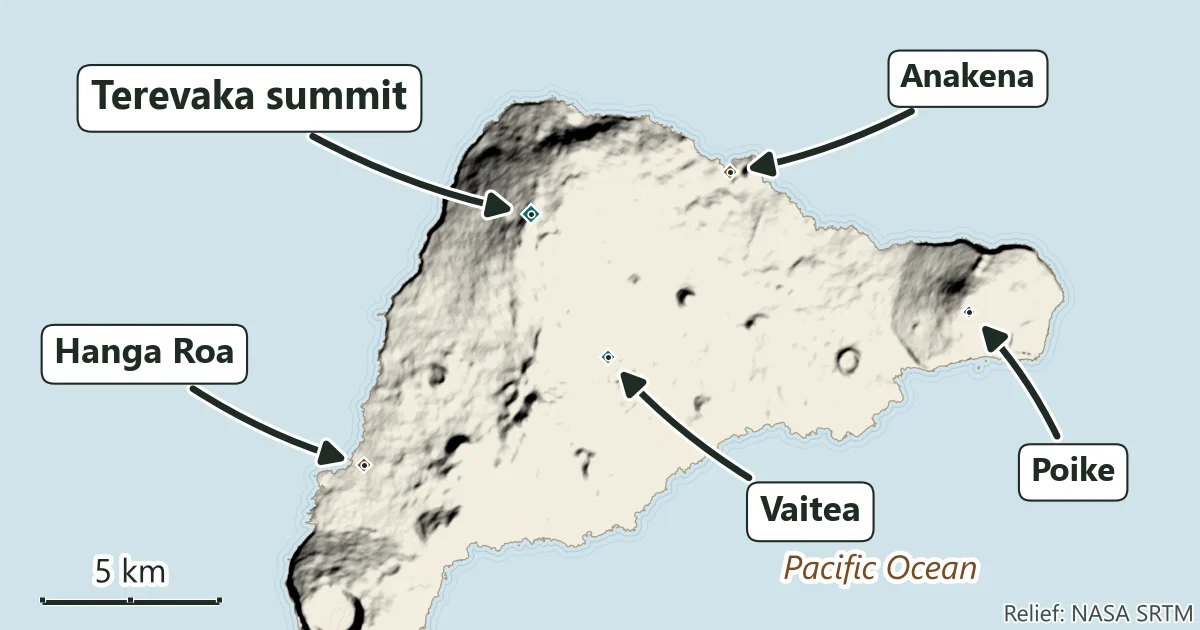
Horse racing goes back a century: in 1918 Bienvenido de Estella laid out a racecourse 350 meters long by the beach at Hanga Roa, opened on September 18, Chile’s national day, and in 1939 Commander Streeter wrote of Sunday-afternoon horse races that stirred the greatest enthusiasm. Foerster also asks why, since the 1960s, horses and cattle have moved around the national park without any restriction.
Riding a horse on Easter Island
The free-roaming horses are not for riding. The horse rides on GetYourGuide and Viator use each stable’s trained horses, and every one of them heads for Terevaka, the highest point of the island. Riders of the Terevaka Horse Excursion write about calm, well-behaved horses; a rider from the United States wrote in September 2026 that they were “great for generally inexperienced riders like us”.
See dates for the Terevaka ride
The Terevaka Horse Excursion’s guide speaks Spanish. For an English-speaking guide, Pukao Moai Tours Rapa Nui’s private ride to Terevaka lets you choose English or Spanish when you book (US$150 per adult, checked November 2026), and Adventure Terevaka’s Golden Hour ride on Viator lists English and Spanish guides (US$150 per person, checked November 2026). The horseback riding page compares all five rides.
Sources: E. Argiriadis and others, “Rapa Nui (Easter Island) Rano Raraku crater lake basin: Geochemical characterization and implications for the Ahu-Moai Period”, PLoS One 16(10), 2021; R. Foerster, “La ganadería en Rapa Nui, una variable económica política a considerar”, Chungara, Revista de Antropología Chilena 53(2), 2021, pages 359 to 373.
Ride an Easter Island Horse
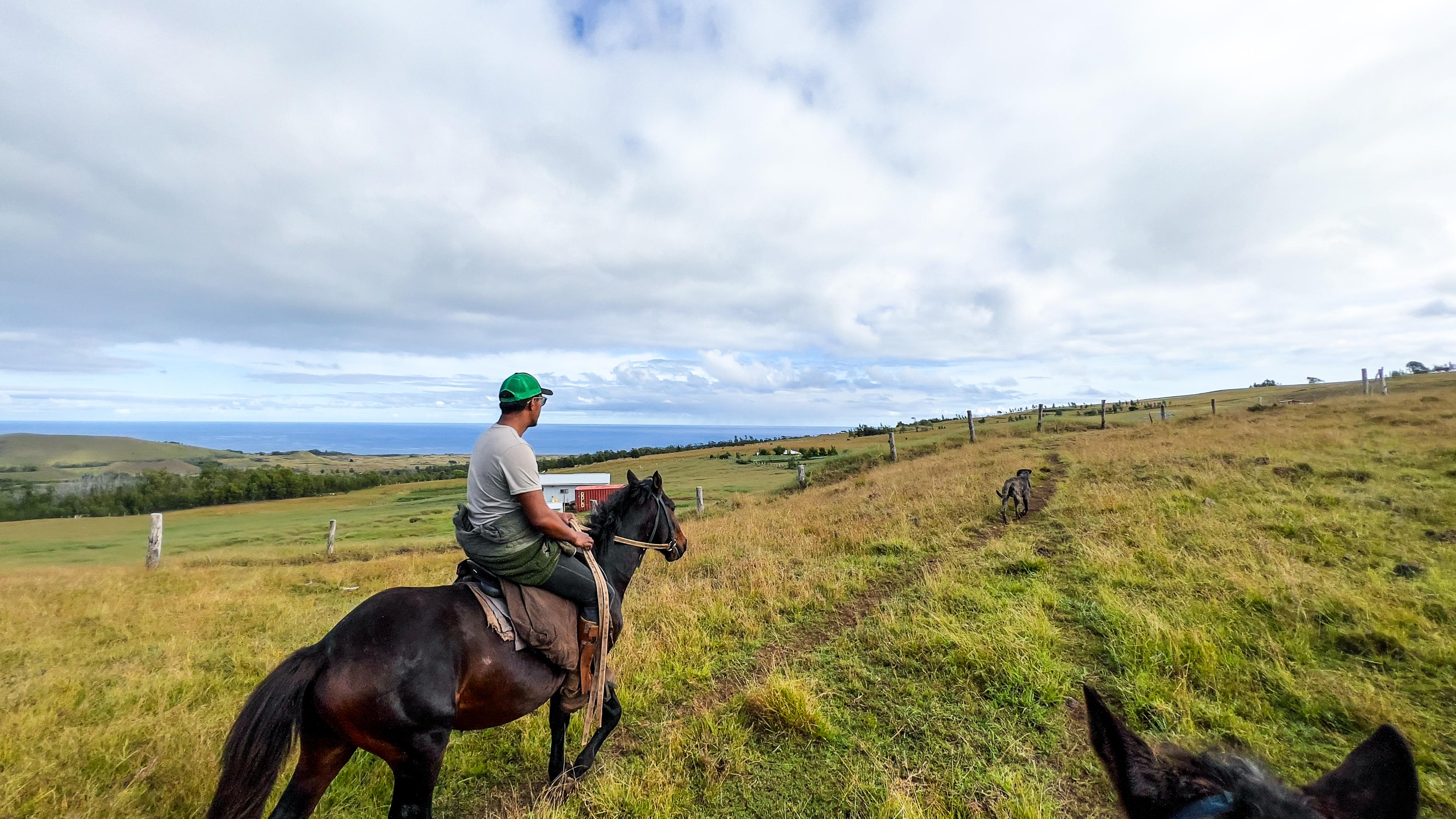
Kapua Tours & Experience's Terevaka Horse Excursion: a trained horse and riding equipment, hotel pickup in Hanga Roa, 2.5 hours to the highest point of the island. Spanish-speaking guide, US$130 per adult.
Check dates